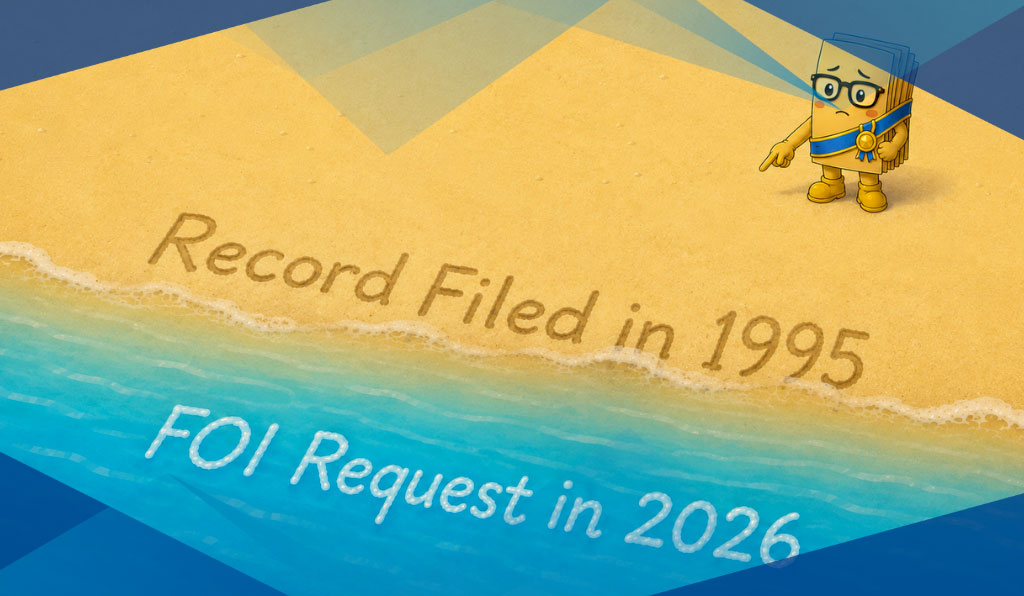
Digitisation plans don’t always start from scratch. Some were written years ago and inherited by current records managers, and could be out of date or incomplete. Creating, or revisiting, a compliant digitisation plan starts with documenting the intended approach before any scanning begins: the scanning resolution and format standards, the metadata conventions to apply consistently, and the disposal or retention authority the digitised copies will eventually need to satisfy. That plan then needs sign-off from the appropriate authority within the agency, typically the CEO or a delegate, before digitising starts. From there, digitisation is carried out against those documented standards, with quality checks built in along the way, so that when it’s time to invoke a disposal authority and destroy the originals, there’s already a clear record showing the conditions have been met. The rest of this guide covers what each of those steps looks like in practice.
The importance of creating a digitisation plan before a single page is scanned
When it comes to compliant digitisation, scanning a record is only half the job. Turning that digitised copy into the official record, and enabling the physical copy to be lawfully destroyed, depends on a complete and compliant digitisation plan that sets the standard before scanning starts.
A Digitisation Plan defines the resolution and format a scan needs to meet, the metadata conventions to apply consistently, and the process required to invoke a disposal authority afterwards. Without a current plan in place before the project begins, digitisation may be completed to an outdated set of standards, which could require rework in the future.
Starting with a current, compliant plan, however, yields a result that an agency can rely on into the future.
What happens if a digitisation plan is outdated?
Done properly, digitisation delivers real, well-documented benefits: records that are immediately accessible and usable across teams, greater sharing and re-use of previous work, better decision-making from having the full context on hand, genuine savings on storage and management costs, and a preserved record of the organisation’s history. All of these benefits depend on having a current and compliant Digitisation Plan in place before scanning starts. Without it:
- Records exist, but can’t be readily used. Without consistent metadata, digitised files become effectively unsearchable, present in the system but impossible to locate when someone actually needs them, so they aren’t genuinely workflow-ready.
- Information isn’t actually shareable. One team can’t easily find or make sense of what another team already digitised if metadata was applied inconsistently between them.
- The full picture isn’t complete when someone needs it. Without a defined scope upfront, projects often have gaps, records skipped or context not captured, undermining the decisions the digitisation was meant to support.
- Storage savings don’t materialise. If the digitised copies don’t meet the standard required to invoke the disposal authority, the physical originals can’t be legally destroyed. The agency ends up paying to store both.
- The historical record itself is at risk. Format or quality that falls short of the standard may not remain usable long-term, the record intended to preserve the organisation’s history becomes the thing that’s eventually lost.
Agencies can avoid these challenges by ensuring their digitisation plan is current and complete before scanning starts.
What a compliant digitisation plan needs to include
Across Australian jurisdictions, a defensible digitisation plan generally require the same things:
- Documented authorisation before digitising begins. If the digital copy is intended to become the official record, that intention needs to be approved and recorded before scanning starts.
- Minimum image and technical quality. A scanned document needs to be legible, complete, and fit for its purpose, not just visible on screen. What “fit for purpose” means varies, and the agency is often asked to define that standard themselves.
- Metadata captured at the point of digitisation. A record without structured metadata is only findable if someone already knows which folder it’s sitting in.
- Disposal authorised separately from digitisation. Scanning a document doesn’t, on its own, authorise destroying the original. That authority comes from a separate retention or disposal instrument, and the conditions attached to it need to be met before the source record can go.
- Evidence that the process itself was followed. Quality checks, sign-off, and an audit trail of the digitisation activity, are what make a plan defensible if it’s ever reviewed against a disposal authority’s conditions.
Your standard depends on your jurisdiction
Every Australian state, territory, and the Commonwealth has its own binding digitisation standard. Rather than summarise any one of them here, we’ve listed them below, along with one consideration worth knowing if you’re operating in that jurisdiction specifically.
What a compliant digitisation plan needs to include
Across Australian jurisdictions, a defensible digitisation plan generally require the same things:
- Documented authorisation before digitising begins. If the digital copy is intended to become the official record, that intention needs to be approved and recorded before scanning starts.
- Minimum image and technical quality. A scanned document needs to be legible, complete, and fit for its purpose, not just visible on screen. What “fit for purpose” means varies, and the agency is often asked to define that standard themselves.
- Metadata captured at the point of digitisation. A record without structured metadata is only findable if someone already knows which folder it’s sitting in.
- Disposal authorised separately from digitisation. Scanning a document doesn’t, on its own, authorise destroying the original. That authority comes from a separate retention or disposal instrument, and the conditions attached to it need to be met before the source record can go.
- Evidence that the process itself was followed. Quality checks, sign-off, and an audit trail of the digitisation activity, are what make a plan defensible if it’s ever reviewed against a disposal authority’s conditions.
Your standard depends on your jurisdiction
Every Australian state, territory, and the Commonwealth has its own binding digitisation standard. Rather than summarise any one of them here, we’ve listed them below, along with one consideration worth knowing if you’re operating in that jurisdiction specifically.
| Jurisdiction | Standard | What to consider about this jurisdiction's digitisation standard |
| Victoria | PROV Digitisation Specification (PROS 25/02 S1) | The newer retention and disposal authority actively prefers digitised records over hardcopy for anything created on or after 1 January 2000. |
| New South Wales | Digitisation specifications for paper records | The specification explicitly excludes records created before 1980, along with photographic series, film, and audiovisual material. |
| Queensland | Digitise physical records | Rather than fixed technical numbers, agencies build and get CEO sign-off on their own "defensible process." |
| Western Australia | Specification for Digitisation of State Records | If scanning doesn't meet the Specification, the result is only ever an access copy, it can never legally replace the original. |
| South Australia | State Records of SA — records and information management | Digitisation requirements sit under a broader "Digital by Default" declaration the SA Government made in 2014. |
| Tasmania | Guideline 8: Digitisation and Disposal of Source Records | Agencies choosing to deviate from the guideline must formally notify the Tasmanian Archives and Heritage Office of that decision. |
| Australian Capital Territory | ACT Government Records Digitisation Guidelines | Largely references other jurisdictions' technical resources, including PROV's plan template, rather than setting fully independent specifications. |
| Northern Territory | Records and information management standards | Digitisation isn't governed by its own dedicated standard, it sits inside the broader recordkeeping standard under the Information Act 2002. |
| National (Commonwealth agencies) | National Archives of Australia — digitisation specifications for paper records | Requires a checksum to be generated for each digitised record transferred to the National Archives. |
Where to go from here
Reviewing your current digitisation plan is your first step. If your agency is planning a new digitisation project, or hasn’t looked at its existing plan in a while, Compu-Stor can help bring an inherited plan up to date or build one from scratch.
- How to Find the Right PROV Disposal Authority (Without Guesswork)
- Why Storing Records Longer Than You Should Is Costing You More Than You Think
- The Risk of 'We'll Get to It Later': How Records Degrade Over Time
- What Happens If You Destroy a Record Too Early? (And How to Put It Right)
- Why Managing Retention Schedules In a Spreadsheet Breaks Down Over Time
- How to Manage a Victorian Government Records Retention Schedule in Excel